Best Bedtime for 6 AM Wake Up: Sleep Cycle Guide for Better Mornings
Waking up at 6 AM can help you start your day earlier, exercise before work, or simply enjoy a more productive morning. But many people struggle with one important question:
What is the best bedtime for 6 AM wake up?
The answer is not as simple as “sleep at 10 PM.”
Your body sleeps in cycles, and waking up in the middle of one can leave you feeling tired even after getting enough hours of sleep.
By understanding your sleep cycles, you can choose a bedtime that helps you wake up feeling refreshed instead of groggy.
Why Your Bedtime Matters
Many people assume that sleeping at any time is fine as long as they get eight hours of sleep. However, your body follows an internal clock known as the circadian rhythm.
This internal clock helps regulate:
- Sleep and wake times
- Hormone production
- Body temperature
- Energy levels
Going to bed at a consistent time helps your body prepare for sleep naturally.
When your bedtime constantly changes, your body struggles to enter deep and restorative sleep.
Understanding Sleep Cycles
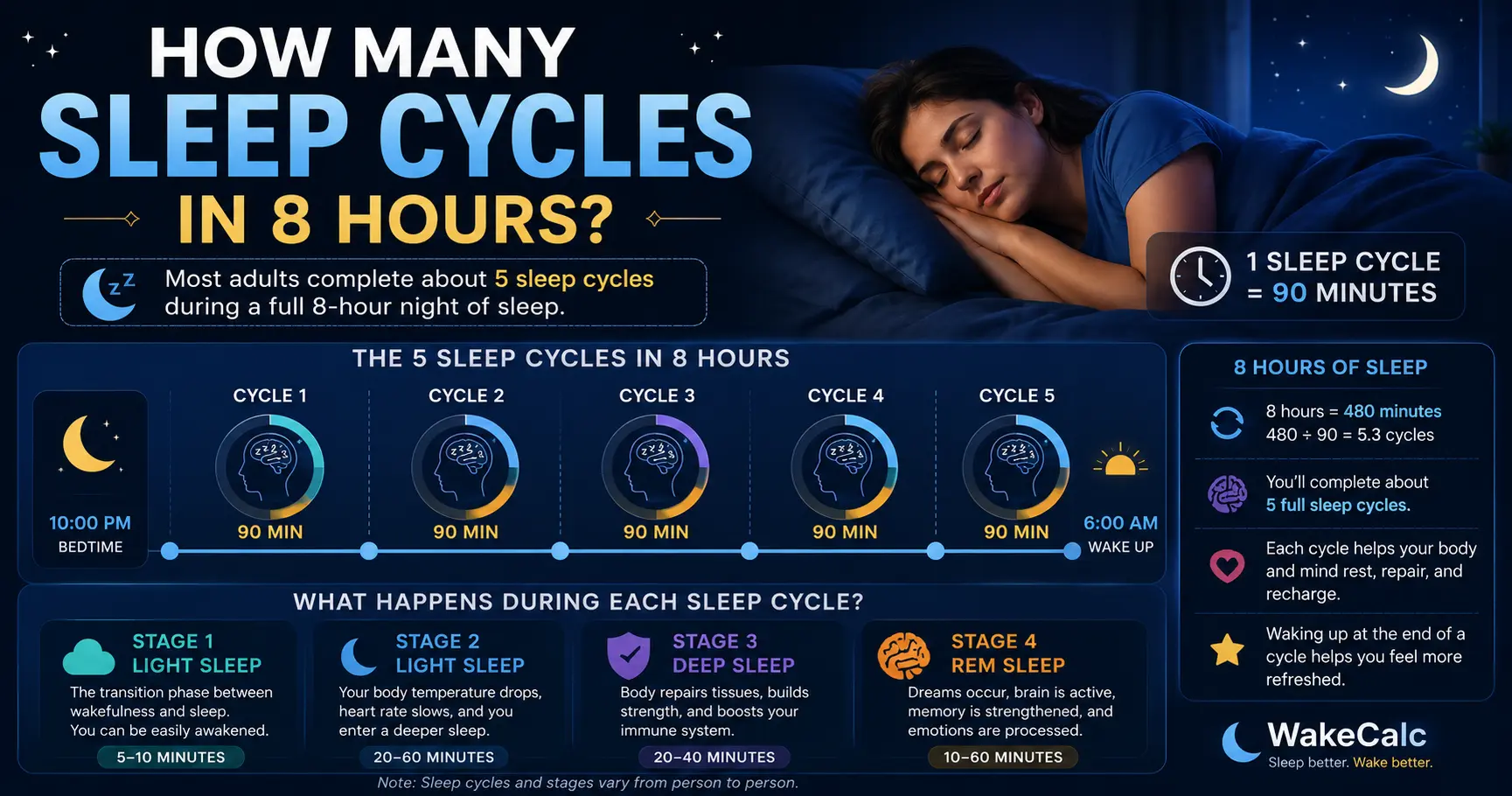
Sleep happens in repeating cycles throughout the night.
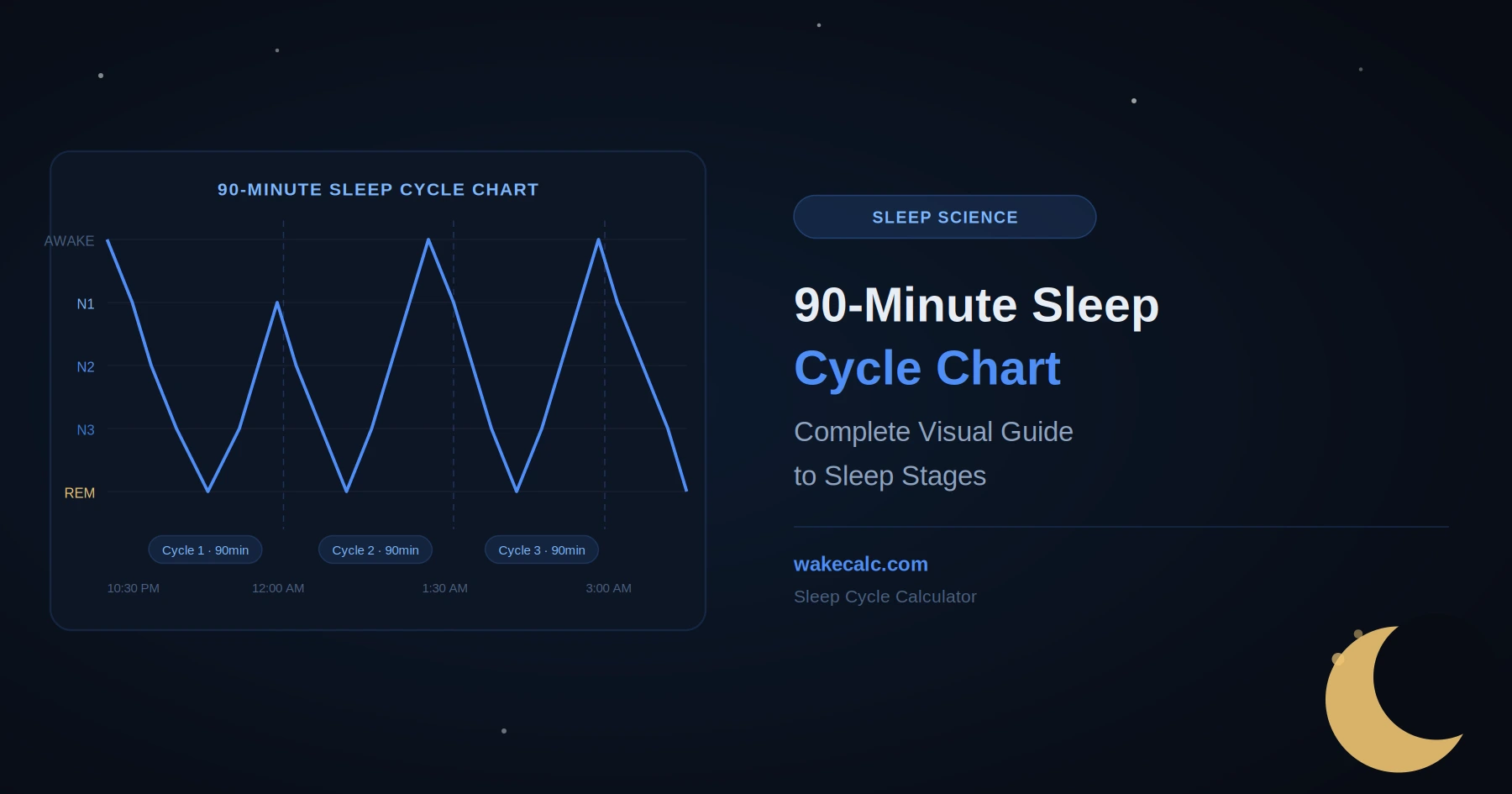
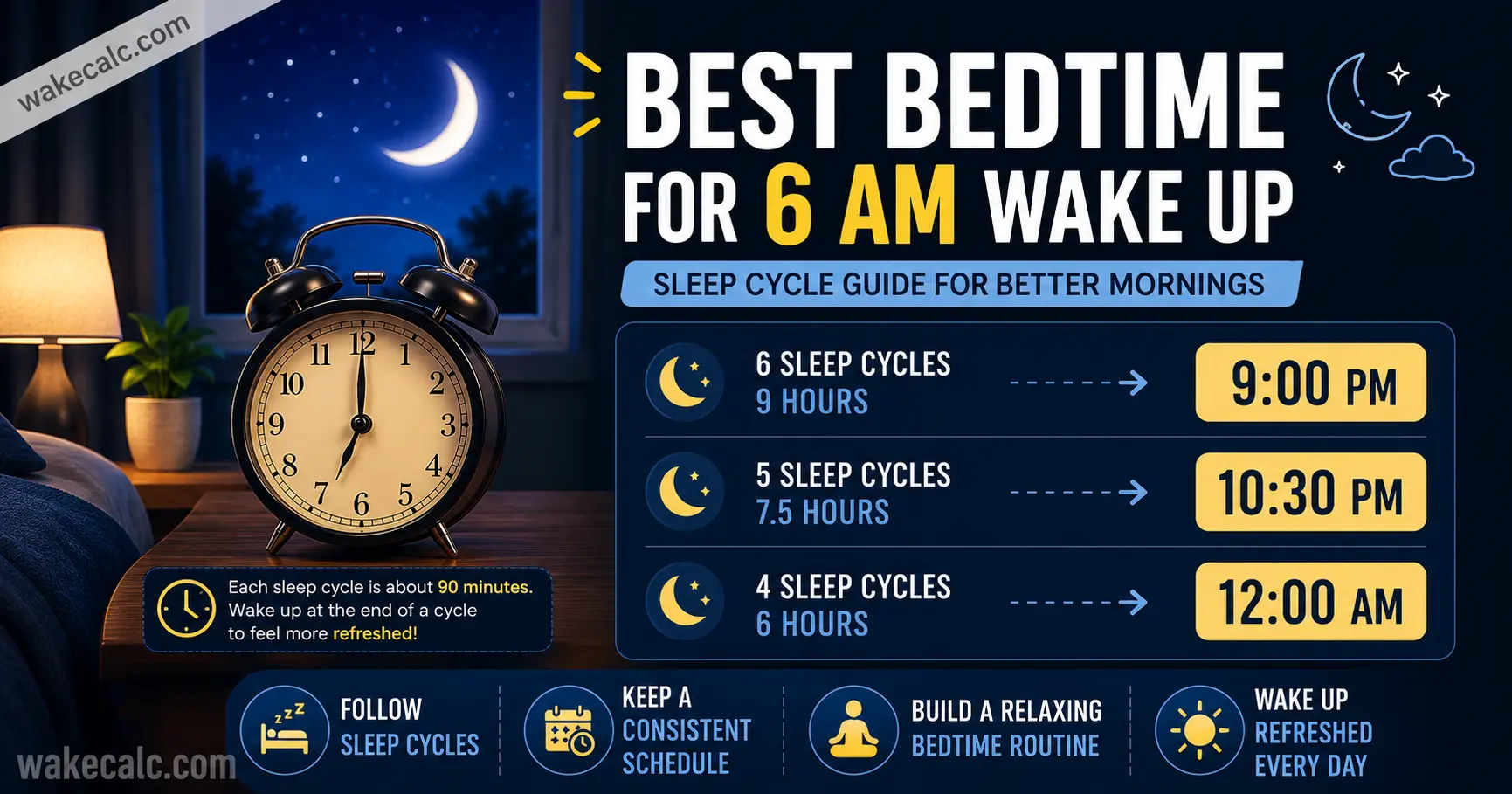
Each cycle lasts approximately 90 minutes and includes:
- Light sleep
- Deep sleep
- REM sleep
Most adults complete between four and six sleep cycles every night.
Waking up at the end of a sleep cycle often feels much easier than waking up in the middle of deep sleep.
🌙 Use the science: The WakeCalc Sleep Cycle Calculator uses this exact 90-minute sleep cycle chart science to calculate your perfect bedtime — free and instant.
Best Bedtime for 6 AM Wake Up
FiIf your alarm is set for 6:00 AM, these bedtimes align with complete sleep cycles.
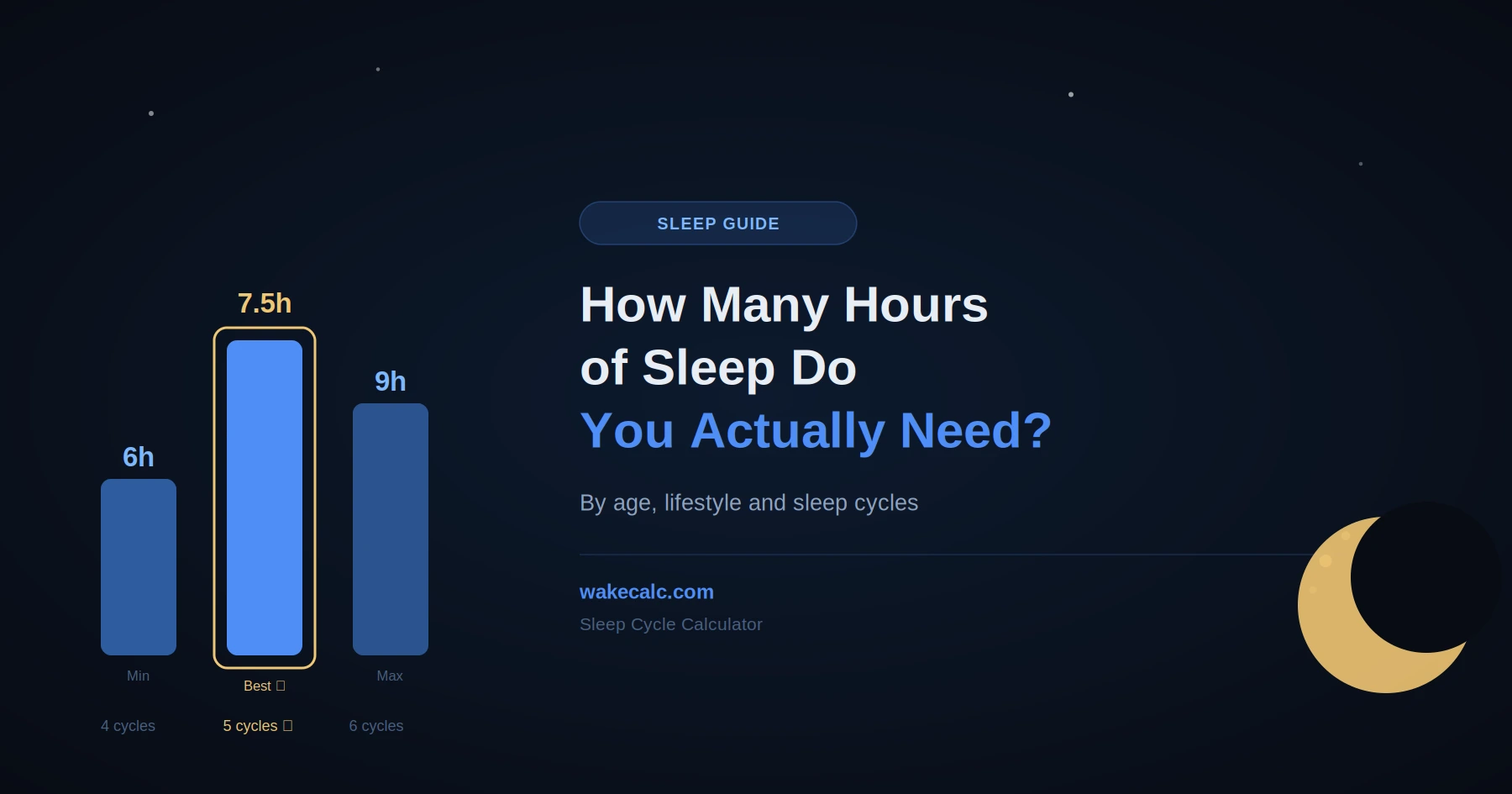
| Sleep Cycles | Bedtime | Total Sleep |
|---|---|---|
| 4 Cycles | 12:00 AM | 6 Hours |
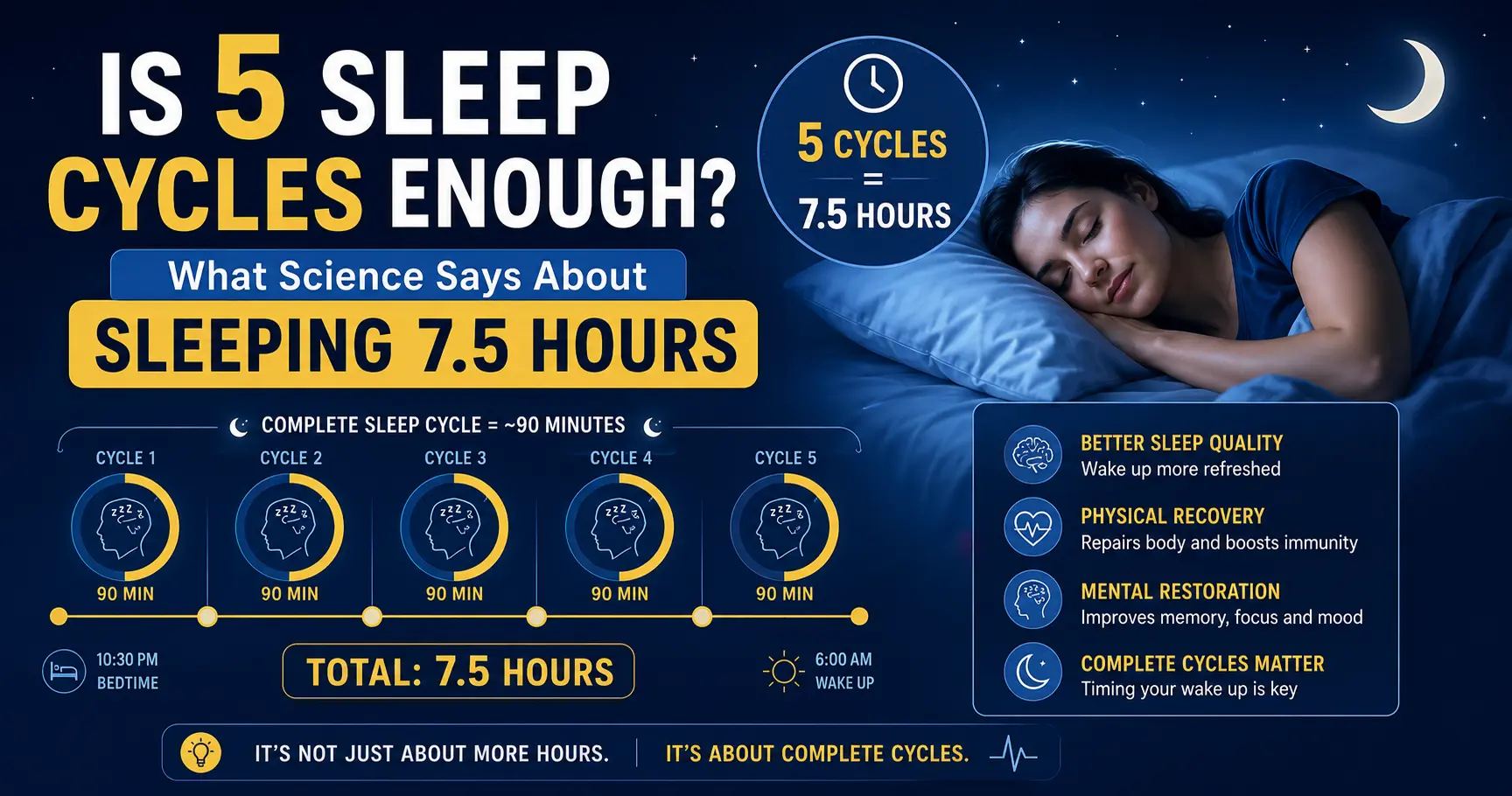
| 5 Cycles | 10:30 PM | 7.5 Hours |
| 6 Cycles | 9:00 PM | 9 Hours |
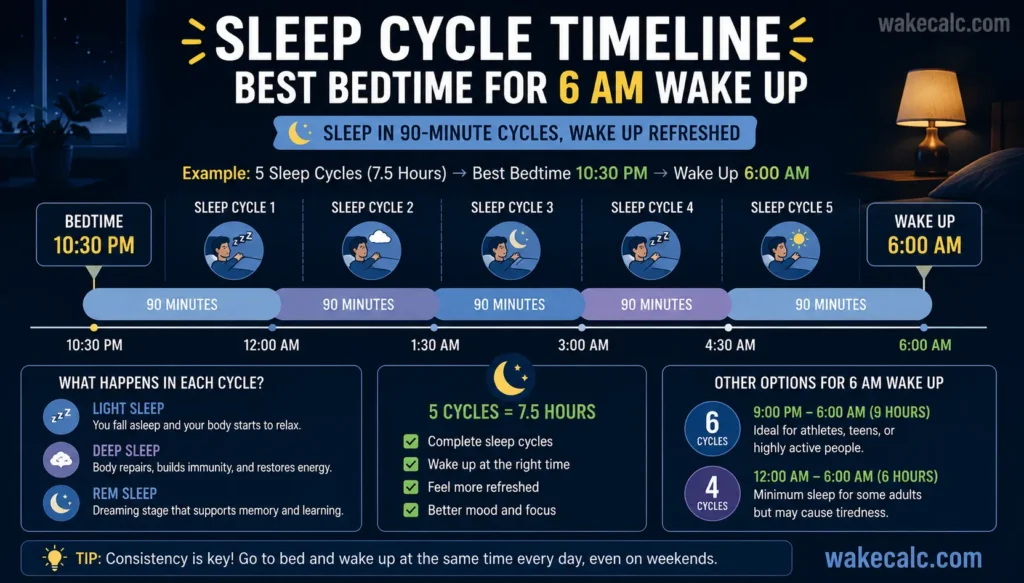
For most adults, 10:30 PM is considered the best bedtime for 6 AM wake up because it allows approximately five complete sleep cycles.
What Time Should I Sleep to Wake Up at 6 AM?
Many people forget that falling asleep takes time.
Most adults need around 15 to 20 minutes to fall asleep.
This means your actual bedtime may need to be slightly earlier.
If you want 5 sleep cycles:
- Get into bed: 10:10 PM
- Fall asleep: 10:30 PM
- Wake up: 6:00 AM
If you want 6 sleep cycles:
Wake up: 6:00 AM
Get into bed: 8:40 PM
Fall asleep: 9:00 PM
Is 7.5 Hours Enough Sleep?
Many people are surprised to learn that five complete sleep cycles equal approximately 7.5 hours.
For many adults, 7.5 hours provides:
- Deep sleep
- REM sleep
- Physical recovery
- Mental recovery
- Improved focus
Research suggests most adults need between 7 and 9 hours of sleep. The exact amount depends on the individual. According to the recommendations for adults getting 7–9 hours of sleep, most people benefit from sleeping within this range.
Why Do Some People Feel Tired After Sleeping 7.5 Hours?
Even when people sleep long enough, they may still wake up feeling tired.
Several factors can affect sleep quality.
Waking During Deep Sleep
If your alarm interrupts deep sleep, you may experience sleep inertia.
This can cause:
- Grogginess
- Brain fog
- Low energy
Poor Sleep Quality
Stress, anxiety, noise, and room temperature can disrupt sleep cycles.
You may spend eight hours in bed but still get poor-quality sleep.
Irregular Sleep Schedule
Going to bed at different times every night can confuse your body’s internal clock.
Excessive Screen Time
Blue light from phones and tablets may reduce melatonin production.
Why Do I Feel Tired Even After Sleeping?
Several reasons can affect your sleep quality:
Waking During Deep Sleep
Your alarm may interrupt a cycle.
Inconsistent Bedtime
Changing your sleep schedule confuses your body clock.
Stress and Anxiety
Mental stress affects sleep quality.
Screen Time Before Bed
Blue light can reduce melatonin production.
Why Sleep Cycles Matter
A sleep cycle includes several sleep stages, including deep sleep and REM sleep. These stages are important for recovery, memory, and overall health.
Completing full sleep cycles may help you:
- Support better mood.
- Wake up more refreshed.
- Improve concentration.
- Reduce daytime fatigue.
A Sample 6 AM Sleep Schedule
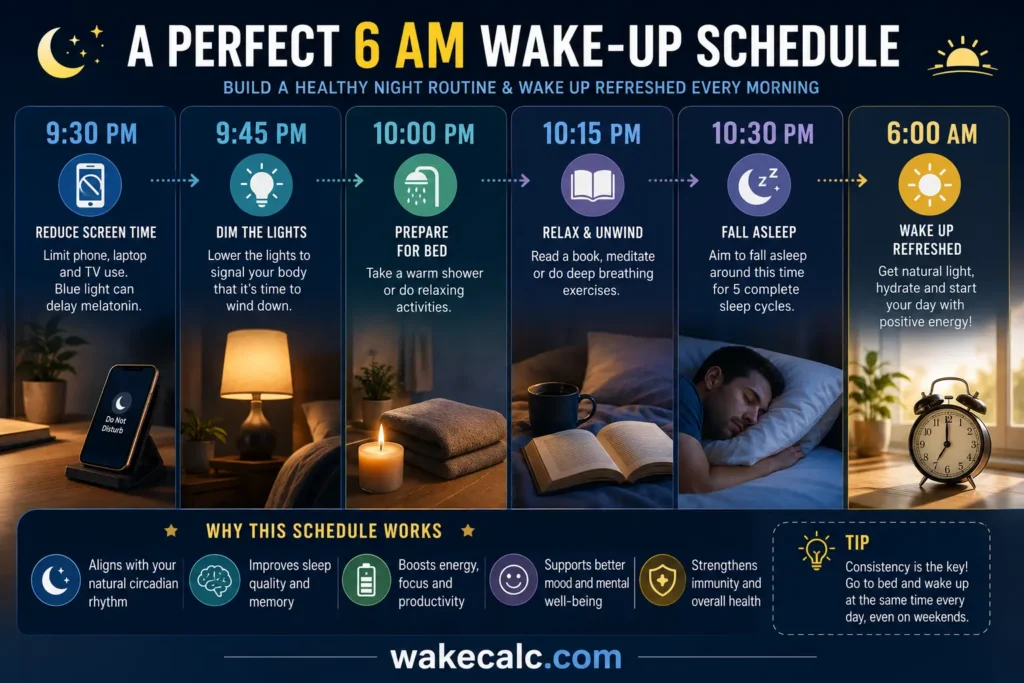
Here is an example of a healthy evening routine.
9:30 PM
Reduce screen time.
9:45 PM
Dim the lights.
10:00 PM
Prepare for bed.
10:15 PM
Relax or read.
10:30 PM
Fall asleep.
6:00 AM
Wake up.
Following a consistent routine helps your body recognize when it’s time to sleep.
Tips for Waking Up at 6 AM Easily
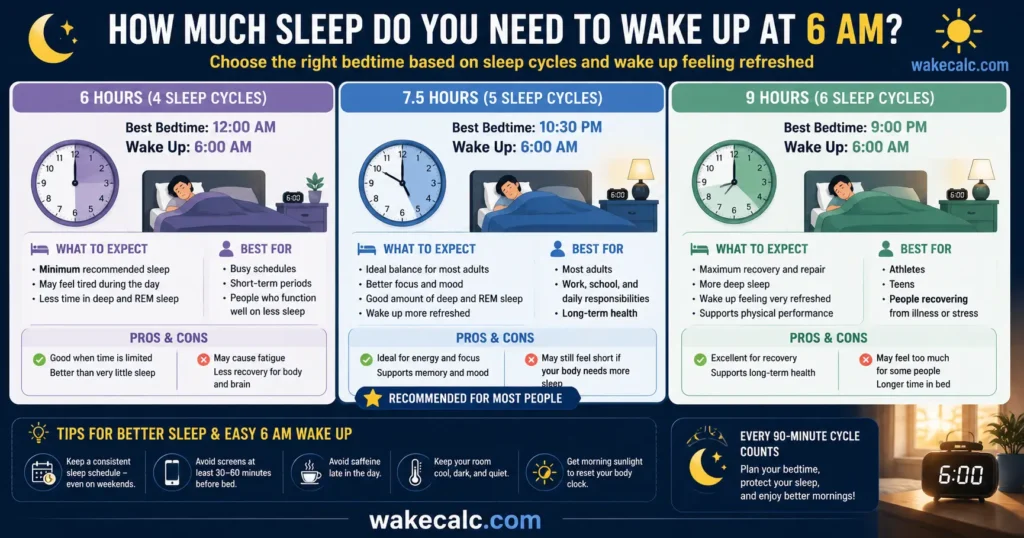
Maintain the Same Wake-Up Time
Even on weekends, try to wake up at 6 AM.
Consistency helps regulate your circadian rhythm.
Avoid Caffeine Late in the Day
Caffeine can remain in your system for several hours.
Try avoiding coffee or energy drinks in the evening.
Keep Your Bedroom Cool
Many sleep experts recommend a cooler room for better sleep.
Limit Phone Usage
Scrolling social media before bed can delay sleep.
Get Morning Sunlight
Exposure to natural light shortly after waking helps regulate your body clock.
Is 6 AM a Good Wake-Up Time?
A 6 AM wake-up can work very well for:
- Office workers
- Students
- Parents
- Fitness enthusiasts
- Early risers
However, not everyone has the same natural sleep schedule.
Night shift workers or people with delayed sleep schedules may need different routines.
Who Should Sleep Earlier?
You may benefit from an earlier bedtime if you:
- Exercise regularly.
- Have physically demanding work.
- Feel tired during the day.
- Wake up naturally before 6 AM.
- Need additional recovery.
Going to bed around 9 PM may allow six complete sleep cycles.
Common Mistakes People Make
Going to Bed Too Late
Sleeping at midnight and waking at 6 AM gives only four sleep cycles.
Sleeping In on Weekends
This can disrupt your body clock.
Using Multiple Alarms
Frequent alarms interrupt sleep.
Drinking Caffeine Late
Evening caffeine may reduce sleep quality.
Can a Sleep Calculator Help?
Yes.
Sleep calculators estimate ideal bedtimes based on 90-minute sleep cycles.
Many people use them to determine:
- When to sleep.
- When to wake up.
- How many sleep cycles they need.
Your WakeCalc sleep calculator can help visitors quickly find the ideal bedtime for a 6 AM wake-up.
Frequently Asked Questions
What is the best bedtime for 6 AM wake up?
For most adults, sleeping around 10:30 PM provides five complete sleep cycles.
What time should I sleep to wake up at 6 AM?
The ideal bedtime is usually between 10:15 PM and 10:30 PM.
Is 7.5 hours enough sleep?
For many adults, yes.
Is six hours enough?
Some people can function on six hours, but most adults benefit from more sleep.
Why do I feel tired after sleeping 8 hours?
Poor sleep quality, stress, or interrupted sleep cycles may cause fatigue.
Final Thoughts
Finding the best bedtime for 6 AM wake up is not simply about sleeping earlier. The quality of your sleep and the number of sleep cycles you complete can make a big difference.
For many adults, going to bed around 10:30 PM allows five complete sleep cycles and provides enough rest to wake up refreshed at 6 AM.
Experiment with your schedule, stay consistent, and focus on healthy sleep habits. Small adjustments to your bedtime routine can often lead to better mornings and more energy throughout the day.