What Is the Best Time to Wake Up? (Science-Based Answer)
What is the best time to wake up? It is one of the most searched sleep questions online — and the science-based answer might surprise you. Productivity gurus swear by 5 AM. Sleep scientists say consistency matters more than the clock. Your body says something completely different every morning. The truth is that the best time to wake up is not a universal number — it is personal, biological, and deeply connected to your natural sleep cycles. In this guide we explain exactly what determines the best time to wake up for you specifically.
⚡ Find your ideal time: Use the WakeCalc Sleep Cycle Calculator to calculate the perfect wake-up time based on when you go to sleep — free and instant.
The Honest Answer: There Is No Universal Best Time to Wake Up
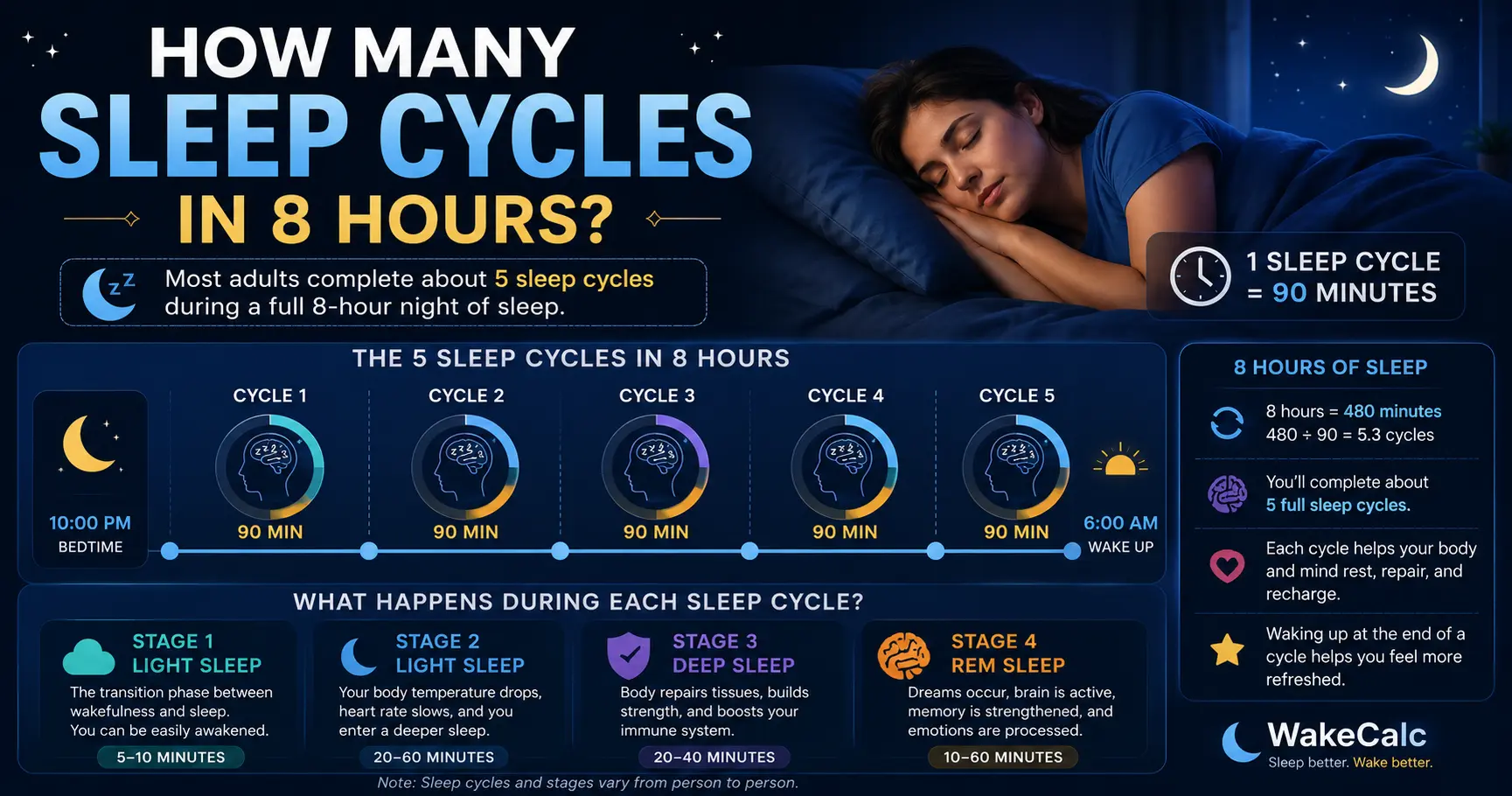
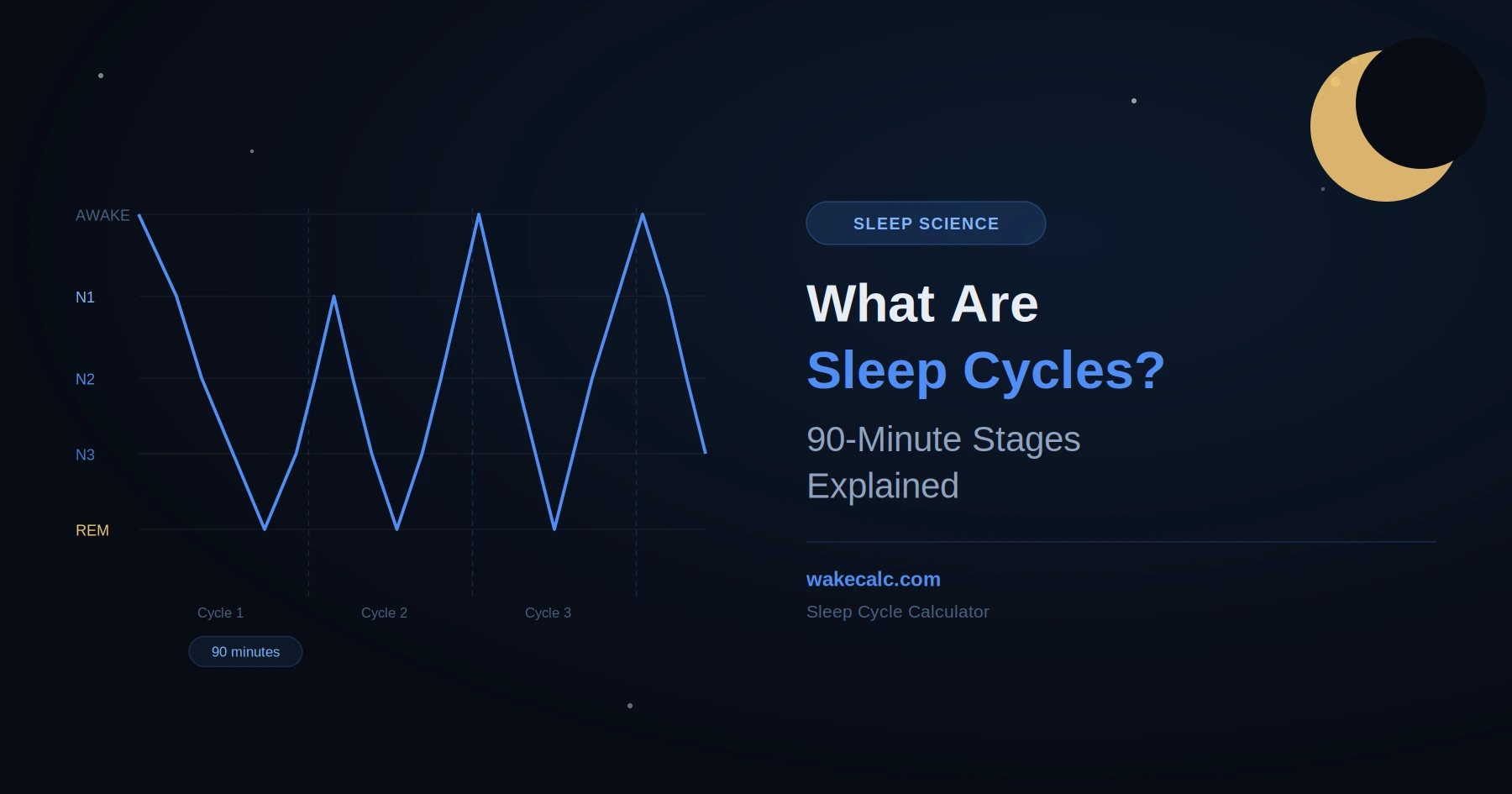
Here is what the science actually shows: the best time to wake up is the time that completes a whole number of 90-minute sleep cycles — whether that is 5 AM, 7 AM, or 8:30 AM. Waking at the end of a complete cycle means your brain is in light Stage 1 sleep — the easiest stage to transition from. You feel naturally alert, cognitively sharp, and physically ready within minutes. Waking mid-cycle, especially from deep sleep, causes sleep inertia that leaves you foggy for hours regardless of what the clock says.
What Research Says About the Best Time to Wake Up
The Cardiovascular Research Finding
A large study of 88,000 participants published on PubMed found that people who fell asleep between 10 PM and 11 PM had the lowest risk of cardiovascular disease — suggesting that sleeping earlier and therefore waking earlier aligns better with human circadian biology for most people.
The Cortisol Awakening Response
Your body naturally releases a surge of cortisol — your primary alertness hormone — in the first 30–45 minutes after waking. This is called the Cortisol Awakening Response (CAR). This surge is strongest when you wake in alignment with your natural circadian rhythm. Waking during your biological morning maximizes this natural alertness boost and makes the best time to wake up feel genuinely energizing rather than forced.
The Chronotype Reality
According to the Sleep Foundation, your chronotype — whether you are naturally a morning person or evening person — is largely genetic. Research shows approximately 25% of people are genuine early birds, 25% are genuine night owls, and 50% fall somewhere in the middle. Fighting your chronotype has real consequences for sleep quality, stress, and long-term health.
Best Time to Wake Up by Chronotype
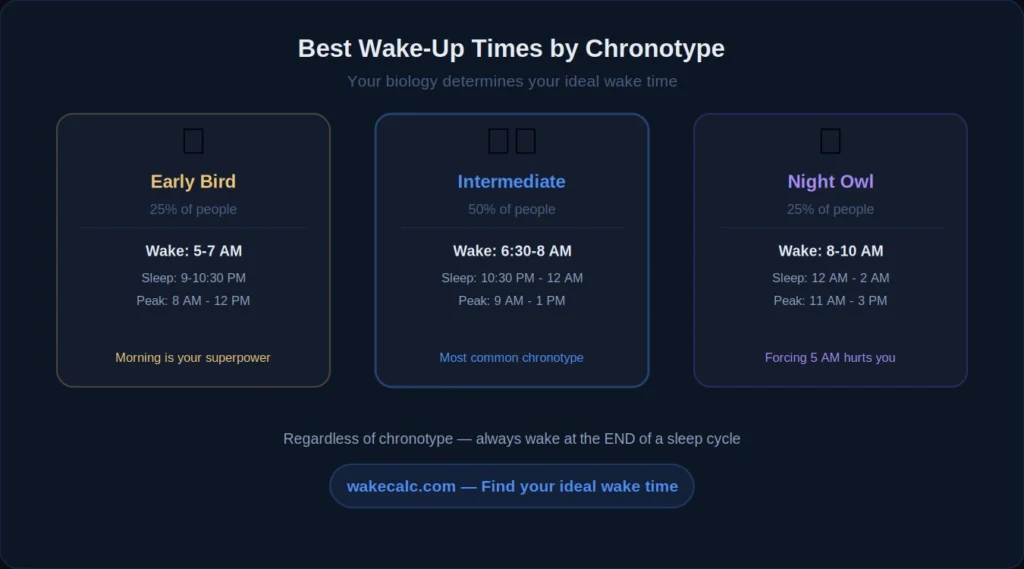
Early Birds (Morning Types) — 25% of People
Natural wake time: 5:00 AM – 7:00 AM. For early birds, the best time to wake up is genuinely early — their biology supports it fully. Ideal sleep window is 9:00 PM – 10:30 PM. Peak cognitive performance: 8 AM – 12 PM.
Intermediate Types — 50% of People
Natural wake time: 6:30 AM – 8:00 AM. The best time to wake up for most people falls in this range. Ideal sleep window is 10:30 PM – midnight. Peak cognitive performance: 9 AM – 1 PM.
Night Owls (Evening Types) — 25% of People
Natural wake time: 8:00 AM – 10:00 AM. For genuine night owls, the best time to wake up is naturally later. Forcing a 5 AM alarm while going to bed after midnight creates chronic sleep deprivation that destroys any productivity benefit. Ideal sleep window is midnight – 2:00 AM. Peak performance: 11 AM – 3 PM.
Why the “5 AM Club” Is Not for Everyone
The 5 AM productivity movement has real benefits — but only for morning chronotypes. For evening types, forcing a 5 AM wake-up while going to bed after midnight creates chronic sleep deprivation that cancels out every productivity benefit entirely. If you are a natural night owl who forces a 5 AM wake-up on 5.5 hours of sleep, you are not being productive. You are operating on cognitively impaired function equivalent to mild intoxication.
The true optimization is not waking up early — it is waking up at the best time for your biology after completing a whole number of sleep cycles. That is the real answer to what is the best time to wake up.
How to Find YOUR Best Time to Wake Up
Your personal best time to wake up is determined by three factors working together:
- Your chronotype — your biological morning or evening preference
- Your schedule constraints — work, school, family obligations
- Sleep cycle alignment — landing at the natural end of a 90-minute cycle
Practical process for finding the best time to wake up for you:
- Identify the earliest you must wake up based on your schedule
- Enter that time into the WakeCalc Sleep Cycle Calculator
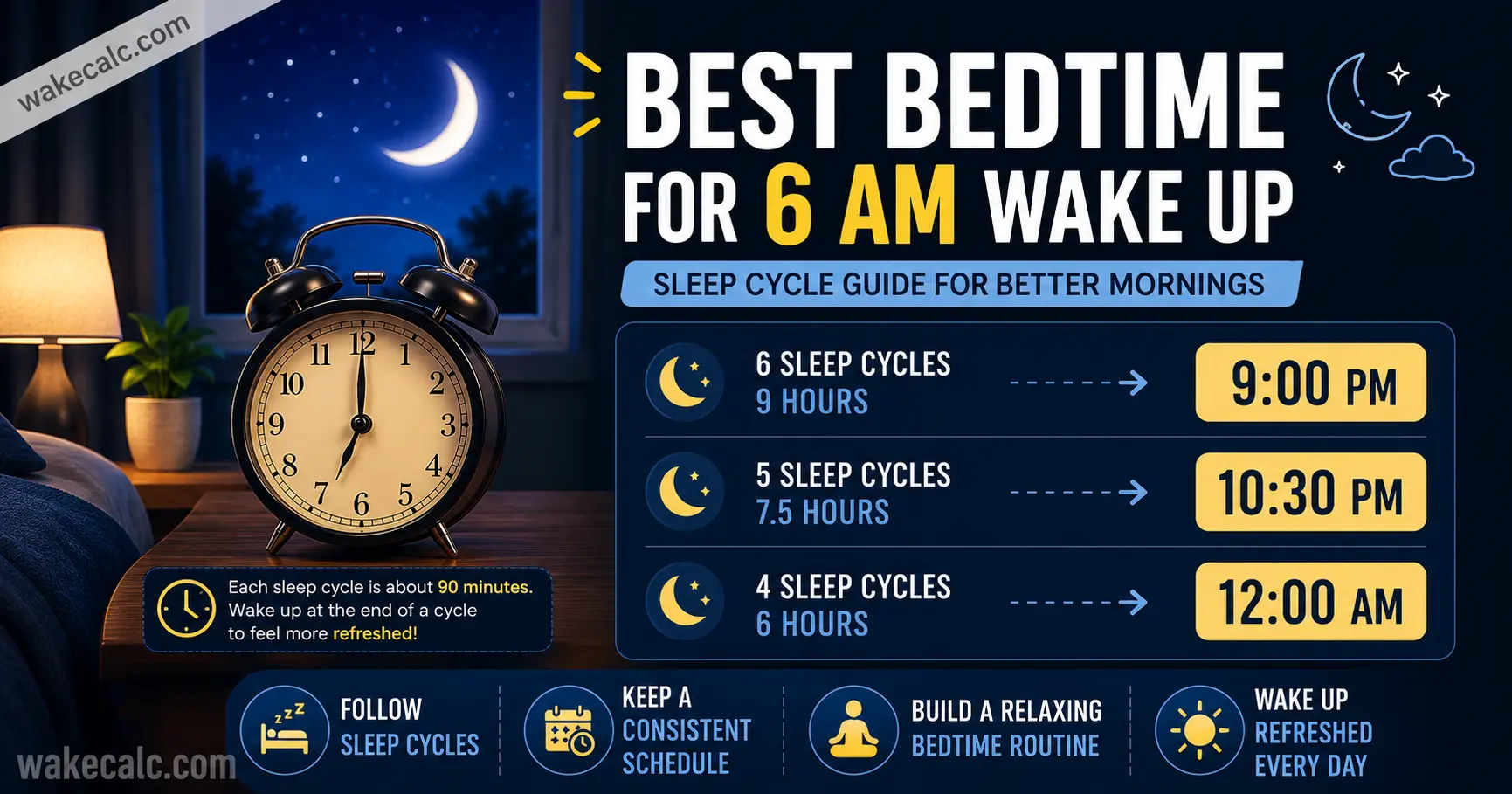
- WakeCalc shows you the perfect bedtimes for 4, 5, and 6 complete cycles
- If your chronotype allows flexibility, try different cycle-aligned times and notice which feels most natural
- Stick to that time consistently — consistency is what makes it the best time to wake up for you personally
Morning Habits That Make Any Wake-Up Time Better
Regardless of what time is best to wake up for you, these habits improve morning alertness significantly:
Never Hit Snooze
Snoozing starts a new incomplete sleep cycle. When the second alarm fires 9 minutes later, you have entered deeper sleep again — making grogginess dramatically worse than if you had gotten up the first time. The best time to wake up is ruined by snoozing.
Get Sunlight in the First 30 Minutes
Morning light exposure is the most powerful circadian signal your body receives. Even 5 minutes outside dramatically improves alertness, mood, and evening melatonin production — making every future morning feel more like the best time to wake up.
Delay Caffeine by 60–90 Minutes
Your cortisol levels are naturally highest in the first 60–90 minutes after waking. Caffeine during this window competes with your natural cortisol peak and blunts it. Delaying your first coffee makes it work more effectively and reduces afternoon energy crashes significantly.
Hydrate Before Coffee
You lose approximately 1 liter of water overnight through breathing and sweating. Dehydration significantly worsens cognitive function and morning brain fog. Drink a large glass of water before your first coffee every morning.
The Single Most Important Factor: Consistency
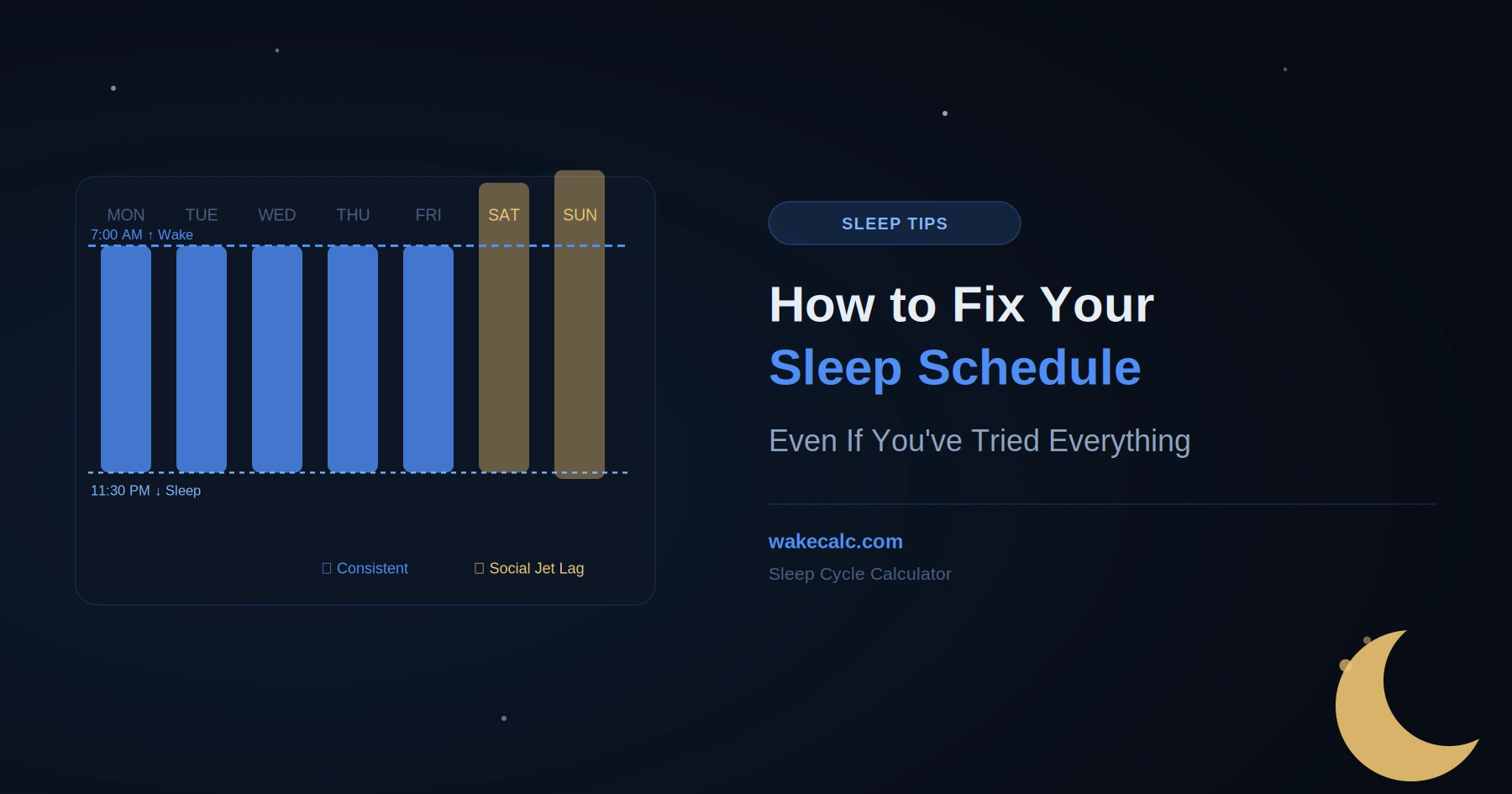
Research consistently shows that a consistent wake time matters more than the specific best time to wake up that you choose. A person who wakes at 7:30 AM every single day will have better sleep quality and health outcomes than someone who wakes at 5 AM on weekdays and 9 AM on weekends. Weekend sleeping in — known as social jet lag — shifts your circadian rhythm later by 1–2 hours and makes Monday morning feel like jet lag every single week.
Frequently Asked Questions
Is 5 AM really the best time to wake up?
Only if you are a morning chronotype AND going to bed early enough for 5+ complete sleep cycles. For everyone else, 5 AM on insufficient sleep impairs the very cognitive functions productivity depends on. The best time to wake up is always after complete sleep cycles aligned with your chronotype.
What is the healthiest time to wake up?
Research points to waking between 6–8 AM as optimal for most adults, aligning with natural daylight patterns. However, the healthiest best time to wake up is always the one that follows complete sleep cycles and aligns with your individual chronotype and schedule.
How do I calculate the best time to wake up?
Enter your bedtime into the WakeCalc Sleep Cycle Calculator and it instantly shows the best wake-up times for 4, 5, and 6 complete 90-minute sleep cycles from when you fall asleep.
Should I wake up at the same time every day?
Yes — consistency in wake time is the single most impactful thing you can do for sleep quality and circadian health. Even on weekends, try to wake within 30–60 minutes of your regular time to maintain your established best time to wake up.
The best time to wake up is not 5 AM, 6 AM, or any other universal number — it is the time that completes your natural sleep cycles and aligns with your chronotype. Find that time, make it consistent, and use the WakeCalc Sleep Cycle Calculator to build your schedule around it. That is the science-based answer to what is the best time to wake up. 🌙
Calculate Your Perfect Wake-Up Time
Tell WakeCalc when you go to sleep — it shows your best wake-up times for 4, 5, and 6 complete sleep cycles instantly.
Find My Best Wake Time →