What Are Sleep Cycles? Everything About 90-Minute Sleep Stages
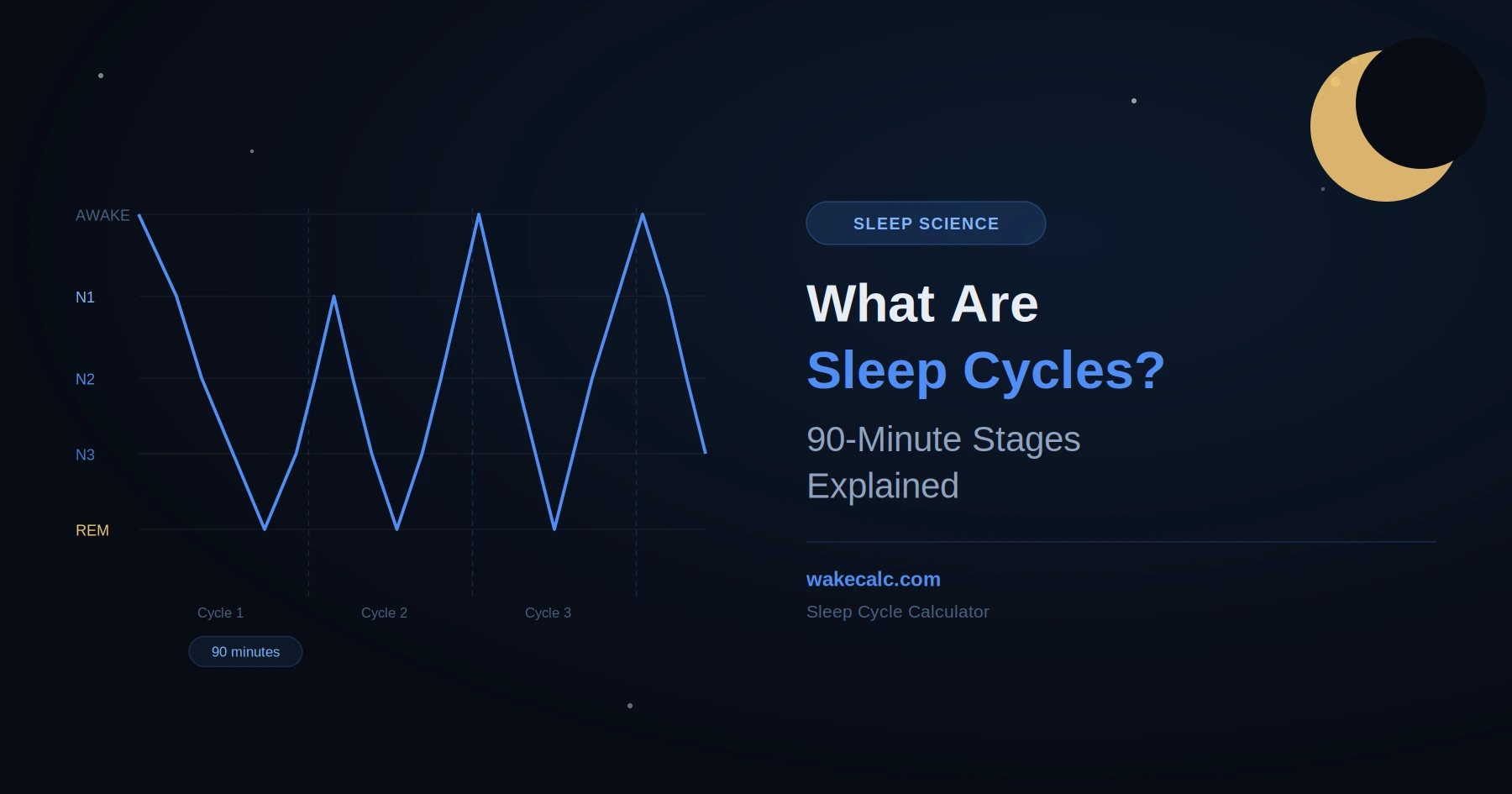
Most people think sleep is a simple off switch — you close your eyes and wake up 8 hours later. In reality, your brain moves through a complex and rhythmic series of sleep cycles every single night. Understanding what are sleep cycles and how they work is the single most powerful change you can make to improve how you feel every morning. Once you understand sleep cycles, waking up refreshed becomes predictable and repeatable — not just occasional luck.
🌙 Use the science: The WakeCalc Sleep Cycle Calculator uses 90-minute sleep cycle science to calculate your perfect bedtime automatically — free and instant.
What Are Sleep Cycles?
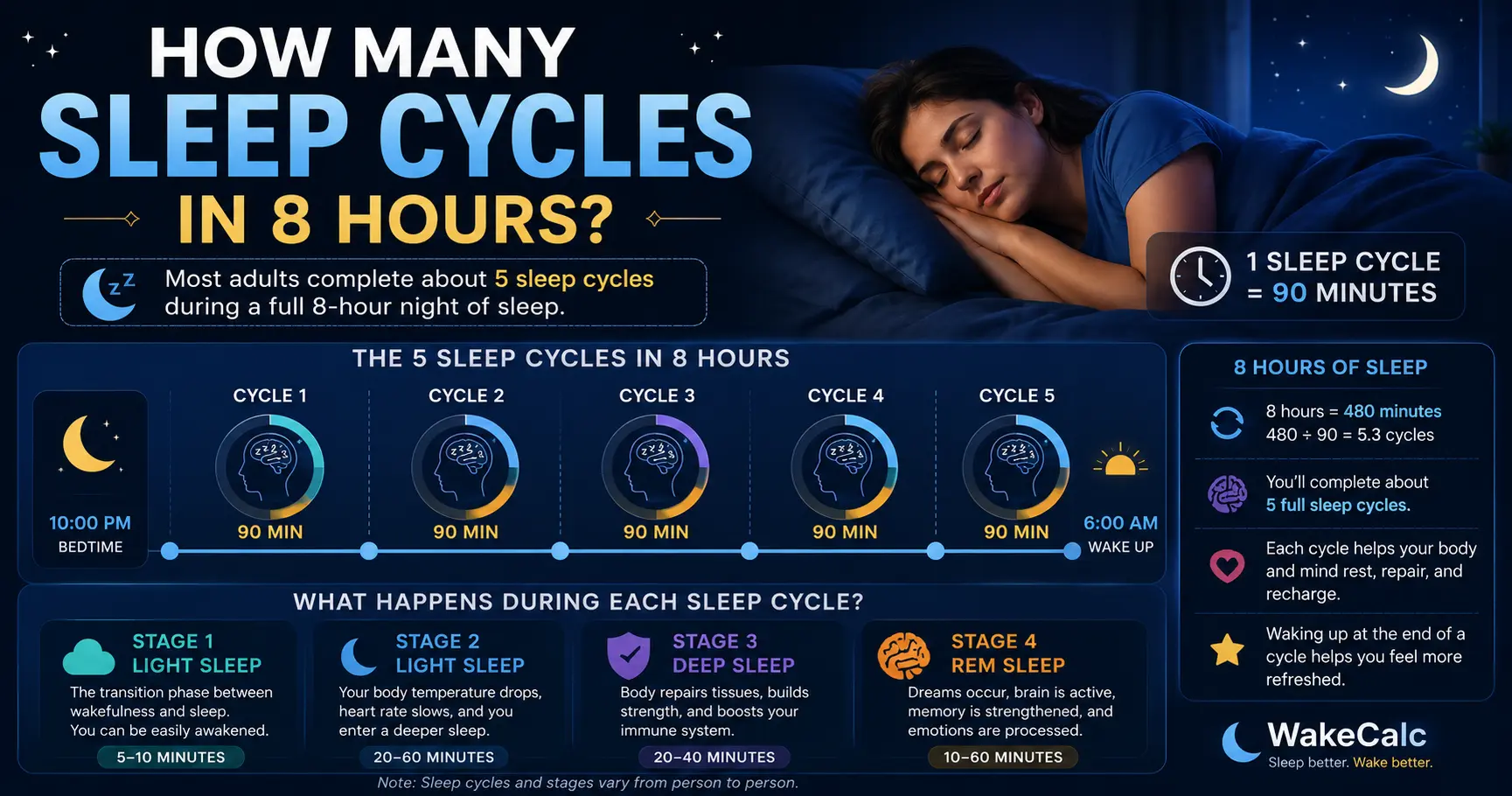
A sleep cycle is one complete loop through all the stages of sleep your brain passes through during the night. Each sleep cycle lasts approximately 90 minutes on average, and a typical full night of sleep consists of 5–6 complete sleep cycles. According to the Sleep Foundation, sleep cycles are not random — they follow a predictable biological pattern that your brain repeats all night long.
Understanding sleep cycles is important because waking up at the end of a complete cycle versus the middle of one is the difference between feeling refreshed and feeling groggy. Your alarm doesn’t care about your sleep cycles — but you should.
The 4 Stages of Sleep Cycles Explained
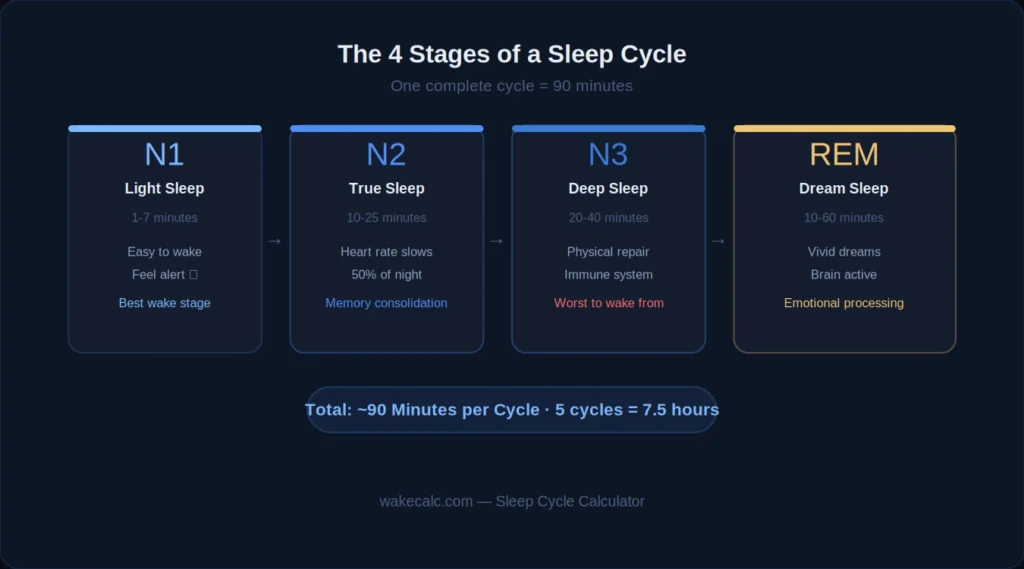
Stage 1 — N1 (Light Sleep): 1–7 Minutes
This is the transition zone between wakefulness and sleep. Your muscles relax, heartbeat slows, and brain waves shift from active beta waves to slower theta waves. You are easy to wake from N1 — a small sound brings you back to full consciousness almost instantly. This is the ideal stage to wake up from within your sleep cycles.
Stage 2 — N2 (True Sleep): 10–25 Minutes
This is where you spend the most time — roughly 50% of your total sleep across all sleep cycles. Your core body temperature drops, heart rate slows further, and eye movements stop completely. The brain produces bursts of activity called sleep spindles, which play a key role in memory consolidation. N2 sleep gets longer in later sleep cycles as the night progresses.
Stage 3 — N3 (Deep Sleep): 20–40 Minutes
This is the most physically restorative stage within your sleep cycles. Your brain produces slow delta waves, blood pressure drops, breathing slows, and your body releases growth hormone to repair muscles and tissues. This is when your immune system does its most important work. Deep sleep is the hardest stage to wake from — if your alarm catches you here, you will experience severe grogginess that can last hours. Deep sleep is most abundant in the first half of the night and decreases with each successive sleep cycle.
Stage 4 — REM Sleep (Dreaming): 10–60 Minutes
REM sleep is the dreaming stage of your sleep cycles. Your brain becomes nearly as active as when you are awake, your eyes move rapidly beneath your eyelids, and your body is temporarily paralyzed to prevent you from acting out dreams. This is when emotional processing, creativity, and memory consolidation happen most intensely. According to research from the National Institute of Neurological Disorders and Stroke, REM sleep is most abundant in the second half of the night — your last sleep cycle before waking can be almost entirely REM.
How Sleep Cycles Change Through the Night
Your sleep cycles are not identical — they shift significantly as the night progresses:
- First 2 sleep cycles (hours 1–3): Heavy on deep N3 sleep, very little REM. Physical recovery is the priority.
- Middle sleep cycles (hours 3–6): Balance of deep sleep and increasing REM. Both physical and mental recovery happen here.
- Last sleep cycles (hours 6–8): Almost no deep sleep, predominantly REM. Memory consolidation and emotional processing dominate.
This is why cutting sleep short — even by just one sleep cycle — disproportionately cuts your REM sleep, which is critical for cognitive function, mood, and learning. The last cycle of the night is the most cognitively valuable.
How Many Sleep Cycles Do You Need Per Night?
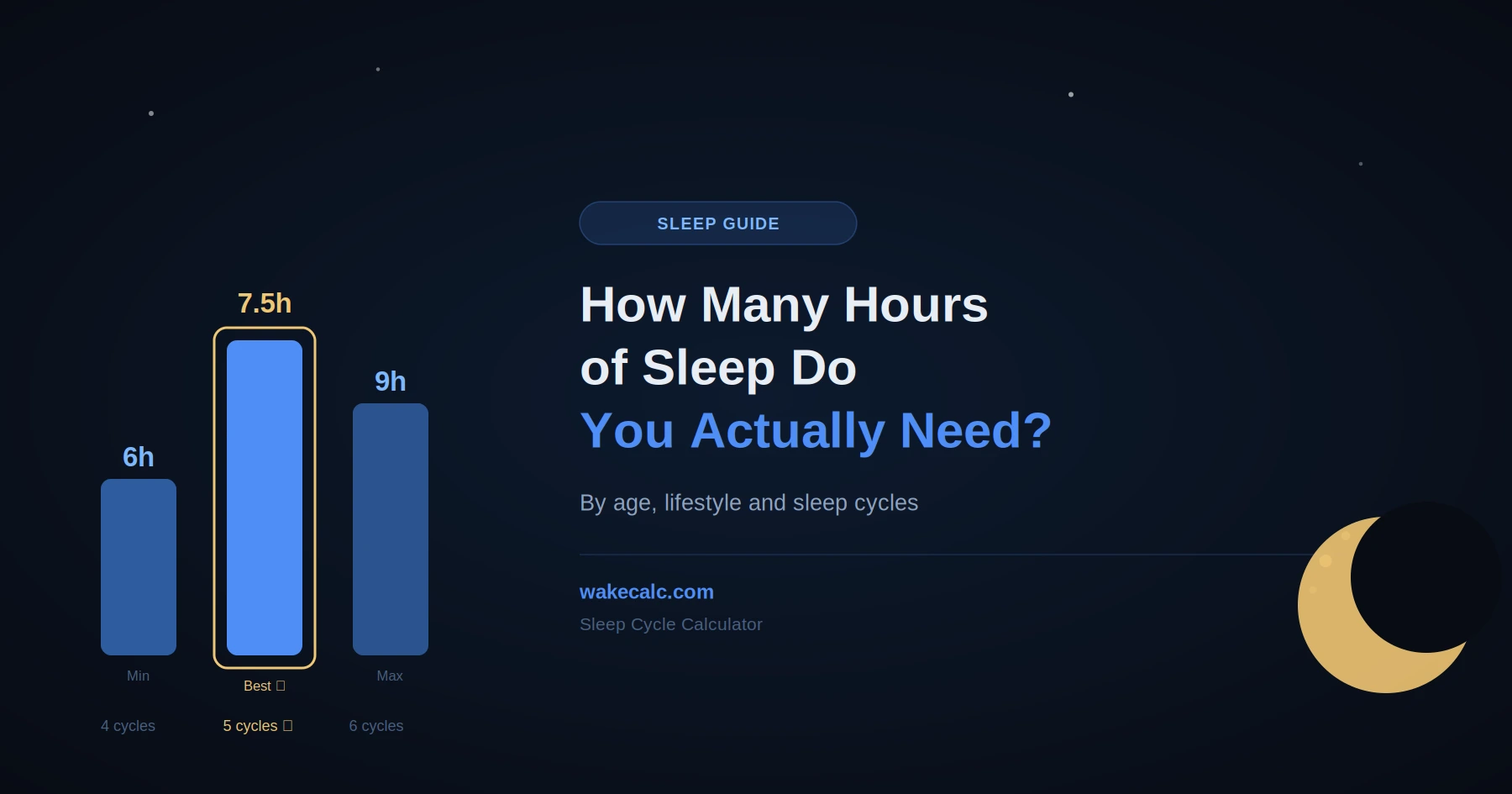
Most adults need 5 complete sleep cycles per night for optimal function — that is 7.5 hours of sleep (plus 15 minutes to fall asleep means bedtime should be 7 hours 45 minutes before your alarm).
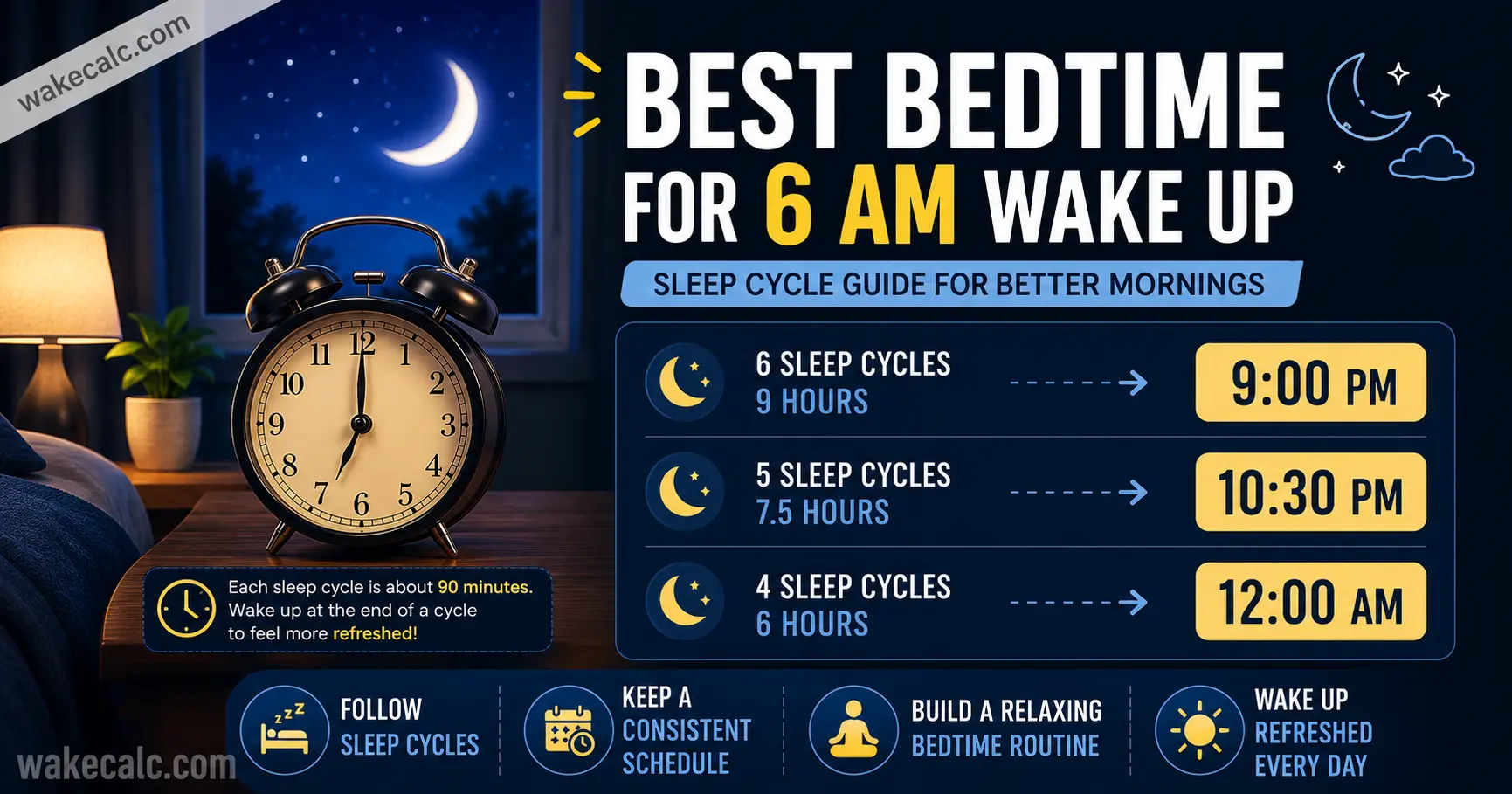
- 4 sleep cycles (6 hours): Minimum viable sleep. Fine occasionally, not sustainable long-term.
- 5 sleep cycles (7.5 hours): The sweet spot for most adults. Optimal cognitive performance and physical recovery.
- 6 sleep cycles (9 hours): Ideal for teenagers, athletes, and people recovering from illness or sleep debt.
Why 90 Minutes Is the Foundation of Sleep Cycles
The 90-minute sleep cycle length is not arbitrary — it is deeply rooted in your circadian biology. Research shows this rhythm is controlled by your ultradian clock, a biological timekeeping system that runs throughout your body. While individual sleep cycles can vary slightly between 80–110 minutes based on age and health, 90 minutes is the scientifically established average for healthy adults — and the basis for the WakeCalc calculator.
What Official Health Organizations Say About 90-Minute Sleep Cycles
The 90-minute sleep cycle is not just a wellness concept — it is backed by the world’s most respected health institutions. Here is what the official sources say:
- NHLBI (National Heart, Lung and Blood Institute): The NHLBI confirms that sleep occurs in repeating cycles of approximately 90 minutes, each containing NREM and REM stages that are essential for physical and mental restoration.
- NHS (National Health Service UK): The NHS states that a typical night of sleep contains around 5 sleep cycles of roughly 90 minutes each, and that waking mid-cycle leads to poor sleep quality regardless of total hours slept.
- AASM (American Academy of Sleep Medicine): The AASM defines healthy adult sleep as 4–6 complete cycles per night, with each cycle averaging 90–110 minutes depending on age and individual biology.
This agreement across leading health institutions confirms that the 90-minute sleep cycle model is one of the most well-established findings in all of sleep science. It is not an approximation — it is a biological reality for the vast majority of healthy adults worldwide.
How to Use Sleep Cycle Science to Wake Up Better
Now that you understand what are sleep cycles, the application is simple: always try to wake up at the end of a complete cycle, not in the middle of one.
The math for calculating sleep cycles manually:
- Decide your wake-up time (e.g., 7:00 AM)
- Add 15 minutes for falling asleep
- Count back in 90-minute sleep cycle blocks: 5:45 → 4:15 → 2:45 → 1:15 → 11:45 PM → 10:15 PM
- Go to bed at 10:15 PM for 5 complete sleep cycles (7.5 hours)
Or use the WakeCalc Sleep Cycle Calculator to do this automatically — enter your wake time and get your ideal bedtimes for 4, 5, or 6 complete sleep cycles instantly.
Frequently Asked Questions About Sleep Cycles
How long are sleep cycles exactly?
Sleep cycles average 90 minutes for healthy adults. Individual sleep cycles can range from 80–110 minutes depending on age, health status, and lifestyle factors. Children tend to have slightly shorter sleep cycles than adults.
Do sleep cycles change with age?
Yes. As you age, you spend progressively less time in deep N3 sleep within each cycle and more time in lighter stages. Older adults experience more fragmented sleep cycles with more frequent awakenings, which is why sleep quality often matters more than quantity as we get older.
Can alcohol affect sleep cycles?
Yes, significantly. Alcohol suppresses REM sleep in the first half of the night and causes a rebound effect in the second half, fragmenting your sleep cycles and reducing overall sleep quality even if total duration appears adequate.
How do I know if I woke up at the end of a sleep cycle?
You will feel naturally alert, your mind will be relatively clear, and you will not feel the overwhelming urge to go back to sleep. Waking at the end of a sleep cycle often means you were already in light N1 sleep before your alarm — sometimes you wake up naturally just before it sounds.
Understanding your sleep cycles is the foundation of better mornings. The science is clear — five complete 90-minute sleep cycles gives most adults the deep sleep and REM sleep they need for optimal physical recovery and cognitive performance. Use the WakeCalc Sleep Cycle Calculator to align your schedule with your natural sleep cycles starting tonight.
Calculate Your Perfect Sleep Cycles Tonight
WakeCalc calculates the exact times to sleep or wake up based on 90-minute sleep cycles — free and instant.
Try WakeCalc Free →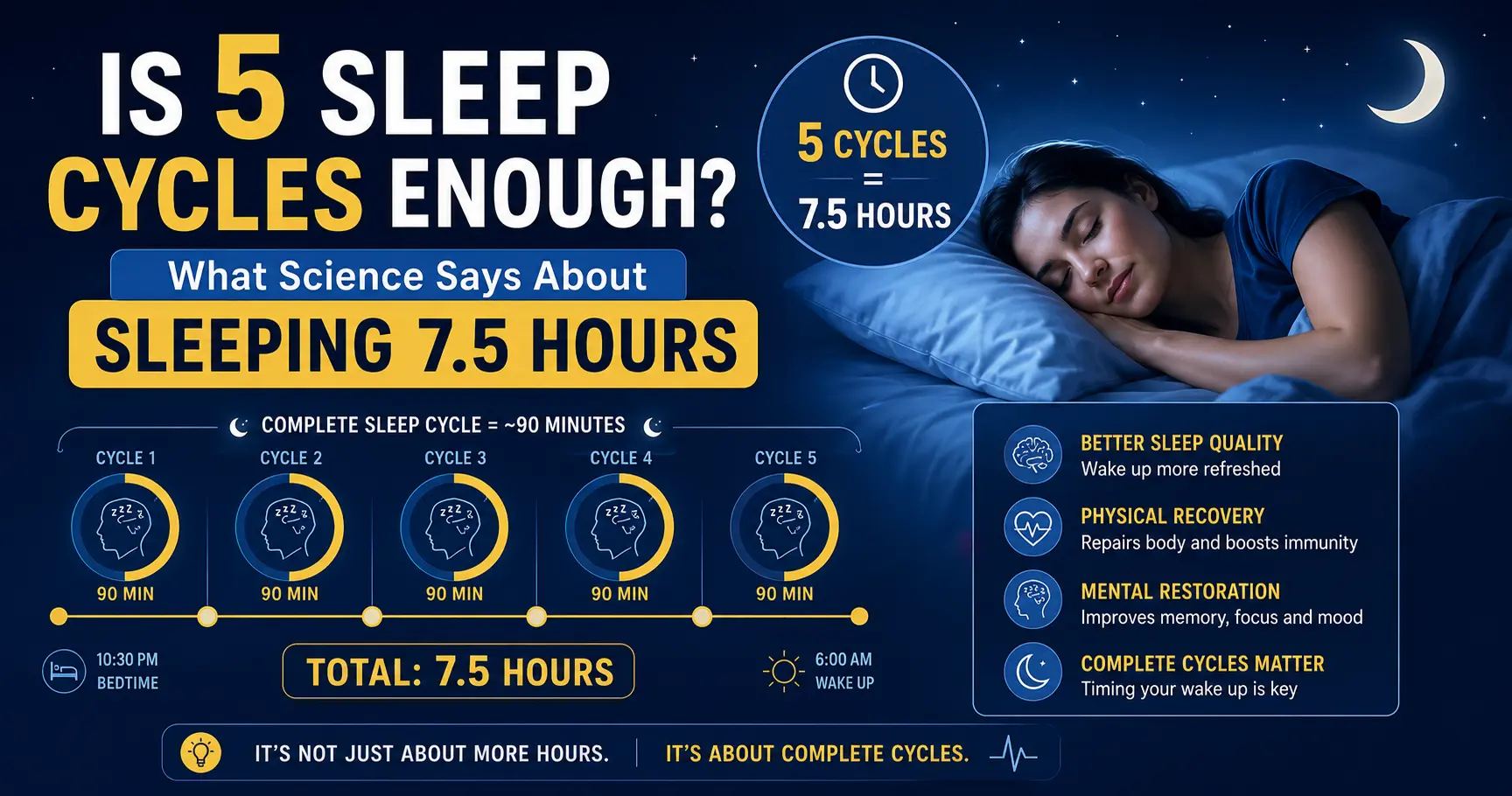


5 Comments