How Many Hours of Sleep Do I Need? (Answer by Age)
“How many hours of sleep do I need?” is one of the most commonly searched sleep questions online — and the answer is more nuanced than the standard “8 hours” advice most people grew up hearing. The right number depends on your age, lifestyle, genetics, and crucially, how well your sleep aligns with your natural 90-minute sleep cycles. In this guide we answer exactly how many hours of sleep do you need — and more importantly, why the timing of those hours matters just as much as the total count.
🌙 Find your ideal bedtime: Use the WakeCalc Sleep Cycle Calculator to calculate exactly when to sleep based on your wake-up time and target sleep cycles.
How Many Hours of Sleep Do I Need by Age?
Sleep needs change dramatically across your lifespan. The National Sleep Foundation provides these evidence-based guidelines for how many hours of sleep you need at every stage of life:
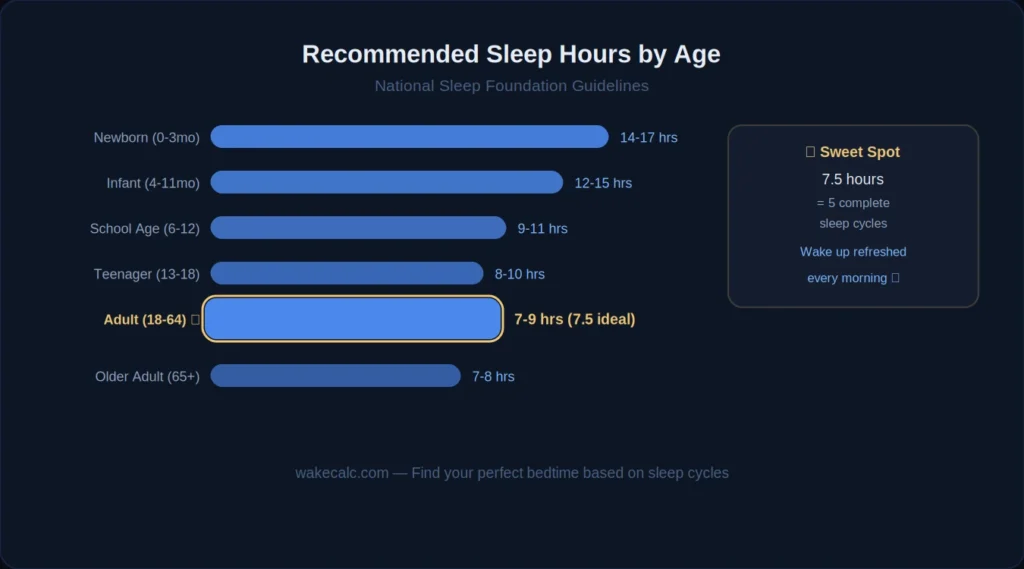
Newborns (0–3 months): 14–17 hours
Newborns spend most of their time sleeping, critical for rapid brain development. Sleep happens in short bursts around the clock.
School Age (6–12 years): 9–11 hours
School-aged children who consistently get 9+ hours show significantly better attention, behavior, learning ability, and physical health outcomes.
Teenagers (13–18 years): 8–10 hours
Teenagers are chronically sleep-deprived — most get only 6–7 hours. Their circadian rhythms naturally shift later, making early school start times biologically problematic for this age group.
Adults (18–64 years): 7–9 hours
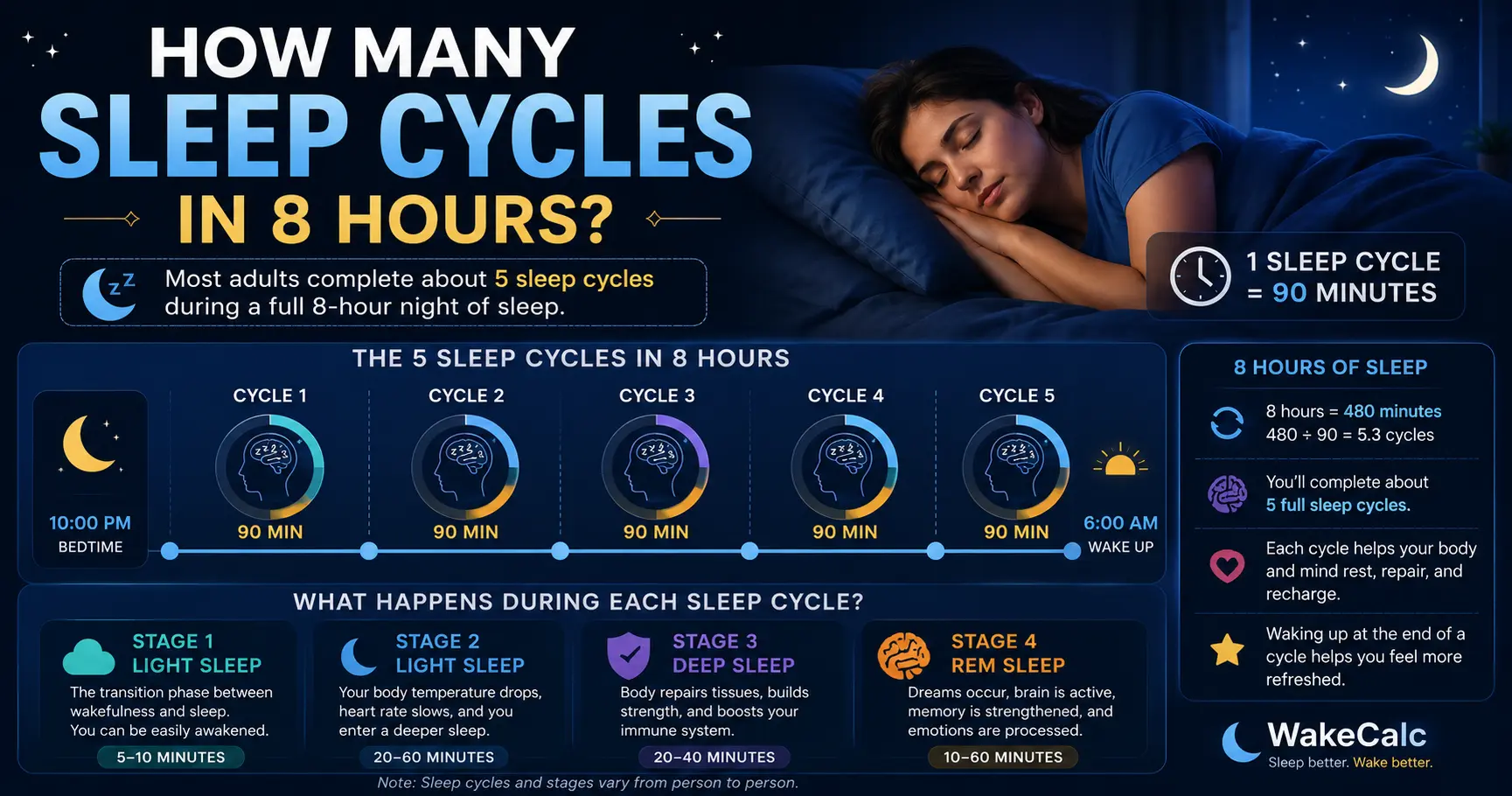
If you are an adult asking how many hours of sleep do I need — the recommended range is 7–9 hours. However, the sweet spot in terms of sleep cycle alignment is 7.5 hours (exactly 5 complete 90-minute cycles). This is why 7.5 hours often feels better than 8 also you can check best time to wake up.
Older Adults (65+ years): 7–8 hours
Sleep architecture changes with age — less deep sleep, more frequent awakenings. Sleep quality becomes increasingly more important than raw quantity.
Why “8 Hours” Is Not Perfect for Everyone
The 8-hour recommendation is an average — and like all averages, it does not fit everyone perfectly. If you keep asking how many hours of sleep do I need and 8 hours never feels enough, consider that genetics play a significant role. A small percentage of people carry a gene mutation allowing them to function on 6 hours. Others genuinely need 9–10 hours to feel their best.
More importantly, total hours is only half the equation. The other half is cycle alignment. According to the CDC, consistent sleep timing is as important as sleep duration for overall health outcomes.
The Real Answer to How Many Hours of Sleep Do I Need
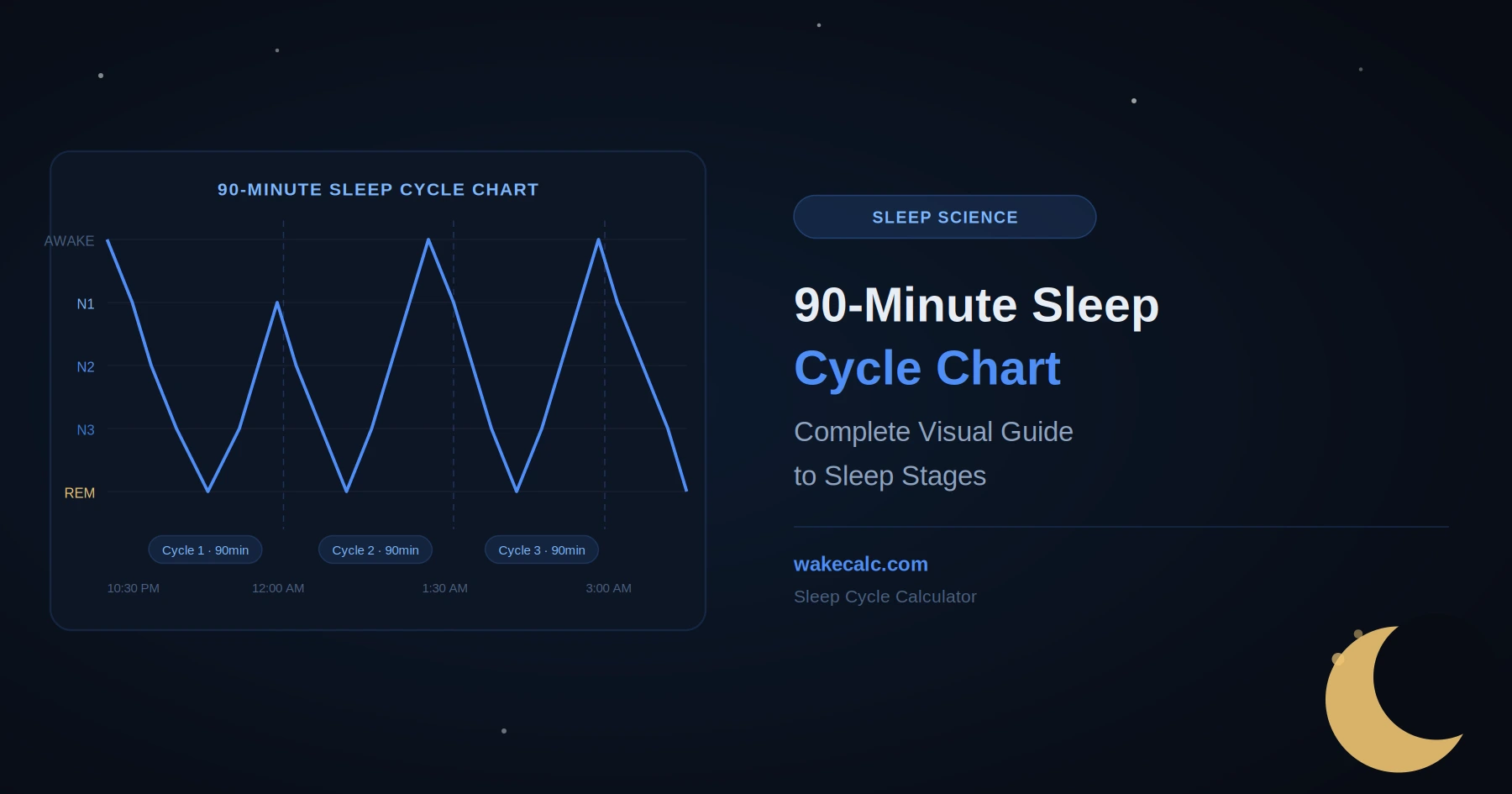
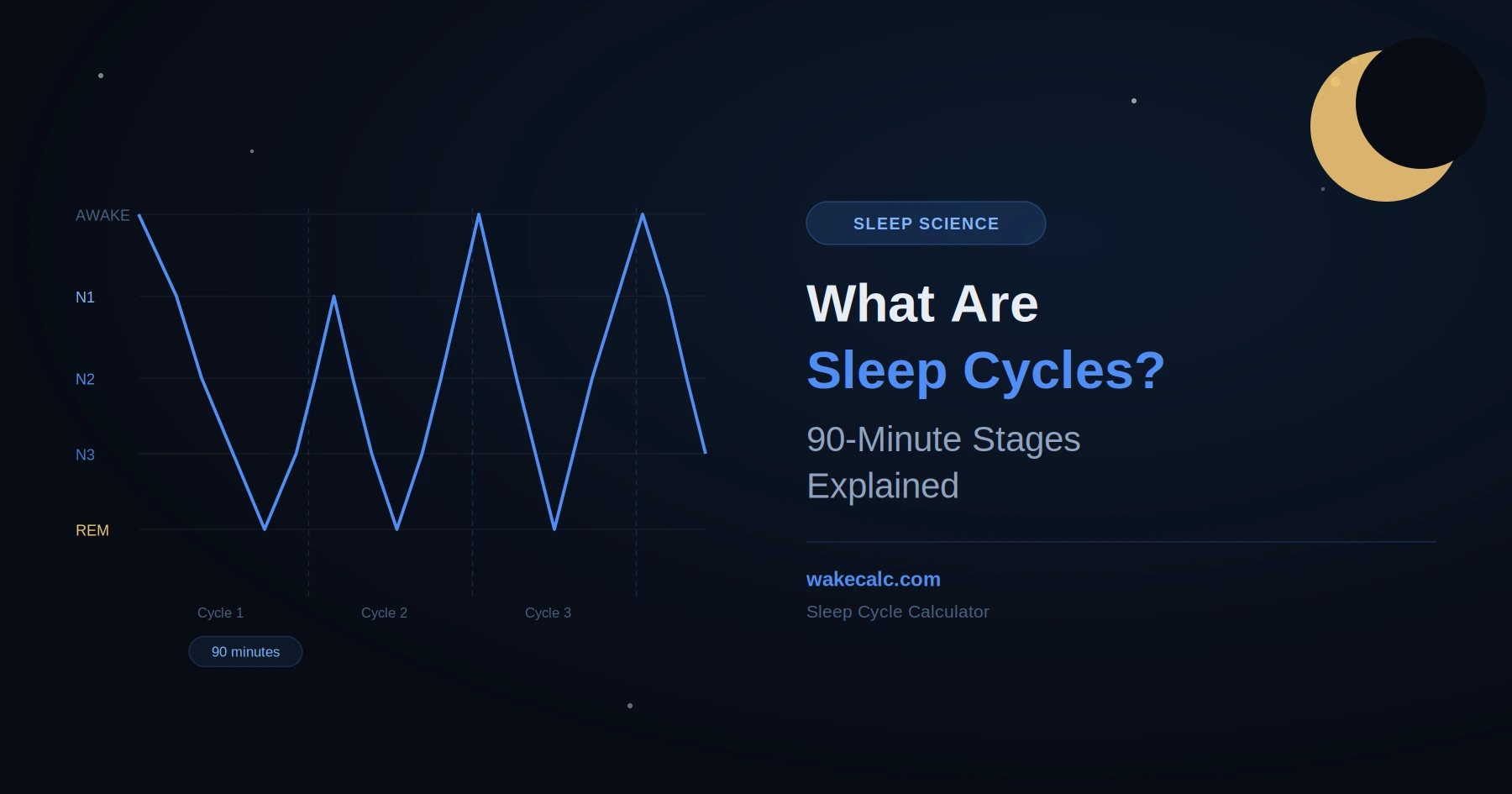
For most healthy adults, the answer to how many hours of sleep do I need comes down to completing whole 90-minute sleep cycles. Here is what each duration actually gives you:
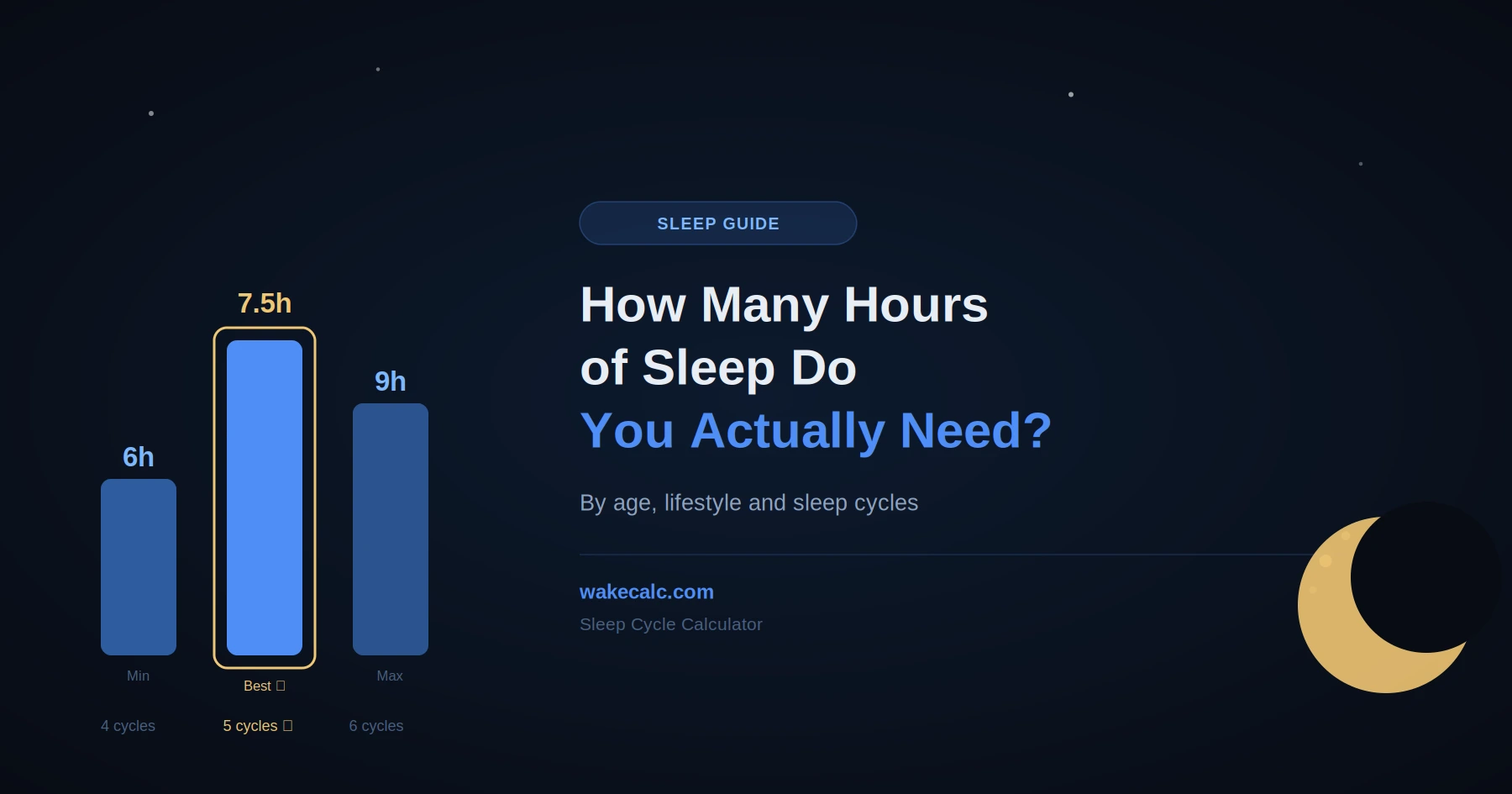
- 6 hours (4 cycles): Minimum viable sleep. Fine occasionally, not sustainable.
- 7.5 hours (5 cycles): The sweet spot. Adequate deep sleep and REM for most adults.
- 9 hours (6 cycles): Ideal for athletes, teenagers, and recovery from sleep debt.
Notice that 8 hours does not appear in this list — because 8 hours lands you 30 minutes into your 6th cycle, right in the middle of deep sleep. This is exactly why so many people who sleep exactly 8 hours still feel groggy in the morning.
Signs You Are Not Getting Enough Sleep
Your body signals clearly when you have not answered how many hours of sleep do I need correctly:
- ⚠️ You need an alarm to wake up every single morning
- ⚠️ You feel groggy for more than 30 minutes after waking
- ⚠️ You fall asleep within 5 minutes of lying down (sign of severe sleep deprivation)
- ⚠️ You rely on caffeine to function through the afternoon
- ⚠️ You sleep significantly longer on weekends — social jet lag
- ⚠️ Mood, concentration, or memory is consistently poor
How Lifestyle Affects How Many Hours of Sleep You Need
Exercise
Regular exercisers — especially those doing intense training — need more sleep for muscle recovery and adaptation. Athletes can genuinely need 9–10 hours. If you have increased your training load and feel more tired, your body is asking for more sleep cycles, not more coffee.
Stress
High psychological stress increases your sleep need. Stress disrupts sleep architecture, reducing the quality of each hour slept — meaning you may need more total hours to get the same restorative benefit.
Age Changes
As you get older, you spend less time in deep sleep and more in lighter stages, making sleep less efficient overall. Older adults often need to spend more time in bed to get the same restorative benefit from their sleep cycles as younger people.
How to Find Your Personal Sleep Need
The most accurate personal answer to how many hours of sleep do I need:
- Take a week off or use a holiday period
- Go to bed when naturally tired — no alarm
- Wake up without an alarm every day
- After 3–4 days (once sleep debt clears), note your natural sleep duration
- That number is your personal sleep need
Most people find this is between 7 and 9 hours. Once you know your number, use the WakeCalc Sleep Cycle Calculator to find the bedtime that gives you exactly that many complete 90-minute cycles.
Frequently Asked Questions
How many hours of sleep do I need as an adult?
Most adults need 7–9 hours. The scientifically optimal amount in terms of sleep cycle alignment is 7.5 hours (5 complete cycles) or 9 hours (6 complete cycles). Use WakeCalc to calculate your ideal bedtime.
Is 6 hours of sleep enough?
For most adults, 6 hours is not sufficient long-term. Research consistently links chronic 6-hour sleep with increased risk of obesity, diabetes, cardiovascular disease, and cognitive decline. Occasional 6-hour nights are manageable — making it a habit is not.
Why do I need more sleep than others?
Sleep needs are highly individual and largely genetic. Age, stress levels, physical activity, and overall health all affect how many hours of sleep you need. If you consistently need 9+ hours and still feel exhausted, speak with a doctor about potential sleep disorders.
Can you catch up on sleep debt on weekends?
Partially. You can recover some cognitive deficits from short-term sleep debt. However, research shows chronic sleep debt has cumulative health effects that a weekend of long sleep cannot fully reverse. Consistent nightly sleep is always better than catch-up sleep.
The answer to “how many hours of sleep do I need?” is not a fixed number — it is the number of complete 90-minute sleep cycles your body needs to feel fully restored. For most adults, that is 5 cycles equaling 7.5 hours. Use the WakeCalc Sleep Cycle Calculator to find your perfect bedtime tonight.
Find Your Perfect Bedtime in Seconds
Enter your wake-up time and WakeCalc tells you exactly when to sleep for 4, 5, or 6 complete sleep cycles.
Calculate My Bedtime →